University of South Florida
Not Without HopeThe University of South Florida is the Tampa university that becomes a decisive arena in Nick Schuyler’s life: it is where he returned to school, earned a place on the football team as a walk-on, met and gradually befriended Will Bleakley, and confronted the transfer-eligibility rule that ended his college career. In retrospect, USF represents both a new beginning and an unrealized athletic future, a place of intense physical discipline whose friendships and disappointments continued to shape Schuyler during the 2009 Gulf of Mexico disaster and its aftermath.
Setting and Entry
Nick Schuyler moved to Tampa in August 2005 after two years at Kent State. His father operated a painting business near Tarpon Springs, and Schuyler came south partly to help him and partly because he wanted a different life from the dormitories and the cold, rainy weather of Ohio. After watching football at USF, he decided that he could compete with the players there. He returned to school in January 2006 and entered the February football tryouts alongside 140 other men.
The tryout transformed the university from a place of relocation into a test of athletic identity. Fifteen candidates were retained for winter conditioning, and eight were invited back for spring practice. Schuyler, who had not played football for five years, won a place on the team as a defensive lineman. He had previously left football at Chardon High School to concentrate on basketball, later tore his anterior cruciate ligament, and spent two years at Kent State before deciding to start over in Tampa.
Football Culture and Physical Discipline
USF’s football program gave Schuyler a demanding structure around which he organized nearly every part of his life. He had few close relationships at school and spent the fall of 2005 and the spring and summer of 2006 preparing for football. He lifted weights, ate as many as 8,000 calories a day, consumed roughly a dozen eggs and a pound of spaghetti and cookies at night, and sometimes woke in the middle of the night to drink a large weight-gain shake.
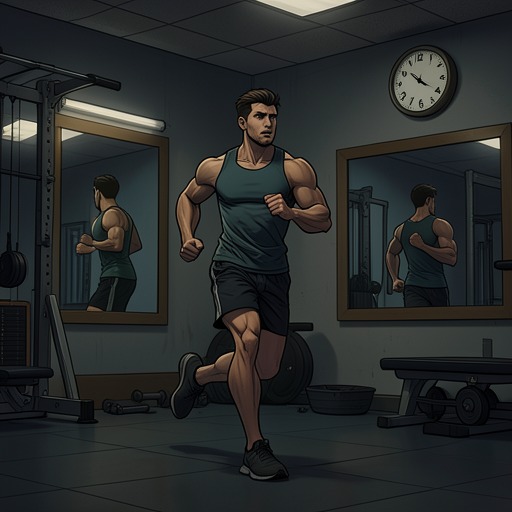
His training was deliberately measurable and relentless. He spray-painted markers for the 40-yard and 100-yard dashes outside his townhouse, then ran repeated sprints with short rests, sometimes training at midnight after falling asleep early. He gained approximately 30 pounds, reaching 250 pounds when he made the team in spring 2006 and 276 pounds by the beginning of fall camp. A coach called him “Big ’Roid” because of his size and strength, but Schuyler rejected steroid use and described himself as strongly opposed to it. The effort placed him among the strongest players in the weight room and made physical preparation central to his sense of competence.
That identity later extended beyond university competition. In October 2008, while completing his final semester at USF, Schuyler tried out for the Tampa Bay Storm of the Arena Football League. He stopped drinking for four months, trained ten times a week, reduced his weight to 233 pounds and 6 percent body fat, and ranked among the three fastest of roughly 300 tryout participants. The team wanted heavier players capable of playing both linebacker and fullback, so his leanness worked against him; ultimately, the league folded. By then he had turned his training discipline into work as a fitness trainer, using exercise to manage stress and helping clients become stronger, lose weight, and gain confidence.
Will Bleakley and the Formation of Friendship
The university also brought Schuyler into the orbit of Will Bleakley. Bleakley played tight end for USF from 2002 through 2006, was a preferred walk-on, appeared in 34 games, started eight times, and caught ten passes. He was a good student and a strong athlete who had considered the Coast Guard Academy and the Air Force Academy before choosing to remain close to home. His parents, Bob and Betty, attended his games, and his football career placed him within the same institutional community as Schuyler even though they initially occupied opposite sides of the team.
At first, their positions kept them apart. Bleakley was an offensive tight end entering his senior year, while Schuyler was a defensive lineman; football players often dressed, practiced, and socialized according to their units, and offense and defense could carry an undercurrent of tension. Their friendship developed through proximity outside those divisions. They discovered that they lived near one another and began driving each other to football. Bleakley came to Schuyler’s home for dinner, and the two adopted his mother Betty’s pasta recipe, made with four kinds of cheese and bread crumbs, as a shared favorite.
After Bleakley graduated, the relationship grew closer. He continued swimming for an hour three times a week, while Schuyler maintained an intensive fitness routine. Their connection extended beyond football into golf, fishing, camping, dogs, sarcastic phrases, cooking, and daily companionship. Bleakley became the designated dog walker and puppysitter for Schuyler and Paula Oliveira, and the joking intimacy of their friendship eventually made him Schuyler’s best friend. Photographs associated with the university show Bleakley and Schuyler together at USF football activities, including games and tailgating, while another image records Bleakley receiving a pass for the university.
Eligibility Crisis and Departure
USF also became the site of Schuyler’s most painful athletic disappointment. Bleakley was a starter in 2006, but Schuyler’s career ended before he appeared in a college game. He was inactive during the first week because of an incomplete grade. During the second week, he was dressed and preparing to run from the tunnel when he was stopped and had to remove his pads while the team entered the field. The National Collegiate Athletic Association had not cleared him to play.
The following week, the university informed him that he would have to miss the entire 2006 season. Because he had transferred from Kent State, he was subject to a one-year eligibility suspension even though he had never played college football. Coaches tried to help, but the decision was outside their control. Schuyler had trained six hours a day to earn his place, and the delayed notification left him heartbroken, embarrassed, and isolated from teammates who were now playing while he remained ineligible.
He practiced with the scout team for several weeks, but the treatment of an ineligible walk-on convinced him that he could not wait for the 2007 season. Although he would have had one year of eligibility remaining, he left football. The decision separated him from the team and from the social world he had built around it. Years later, while stranded at sea, he returned repeatedly to the question of whether he should have remained at USF, sat out the year, and played the following season. The university therefore survives in his recollection not simply as a campus, but as the setting of a road not taken.
Later Meaning and Narrative Significance
The importance of USF extends into the book’s account of the 2009 accident. Football at the university connected Schuyler with Bleakley, and through the wider athletic world with Marquis Cooper and Corey Smith. Schuyler later described himself, Cooper, and Smith as being in comparable physical condition before their training together, while his endurance-based workouts gave him confidence in sustained exertion. During the crisis at sea, that training became practical rather than competitive: he repeatedly reminded the others to move their toes and feet, flex their chests, shrug their shoulders, and keep their blood moving.
USF also helps explain why the missing men attracted such intense public attention. Cooper and Smith had played in the National Football League, Bleakley had been a USF tight end, and Schuyler was identified through the same athletic network. When the Coast Guard confirmed that four men were missing, rather than three, it also confirmed that two were NFL players, and officials warned that high media interest was expected. The university’s football connections thus formed part of the social infrastructure through which the disaster became a public event.
For Schuyler, however, USF’s deepest significance remains personal. In the water, he remembered his missed chance to play there and wondered whether a single decision—to remain, wait, and use his remaining eligibility—might have changed the course of his life. He also understood the university as the place where his friendship with Bleakley was made possible. After the rescue, when he spoke to Bleakley’s parents about their son’s final hours, he emphasized that their cooperation at sea had been essential and that Bleakley had helped obtain life jackets, Gatorade, and pretzels from beneath the overturned boat. USF thus stands at the intersection of aspiration, institutional frustration, friendship, and loss: it gave Schuyler a team, took away a playing career, and helped create the relationship whose absence defined his life after the accident.